Reading Inspires!
Recently I had the pleasure of being a featured guest speaker on Reading Inspires- Reading is Fundamental’s popular podcast. I hope you will take a few minutes to listen to my conversation with the wonderful Erin Bailey Ed.D. RIF Vice President of Literacy Programs and Research. We discuss and share evidence-based ways to improve comprehension and engagement using the Fab Four.
A Podcast with Reading is Fundamental
Reciprocal Teaching Strategies- Boost Reading Comprehension
Recently I had the pleasure of being a featured guest speaker on Reading Inspires- Reading is Fundamental’s popular podcast. I hope you will take a few minutes to listen to my conversation with the wonderful Erin Bailey Ed.D. RIF Vice President of Literacy Programs and Research. We discuss and share evidence-based ways to improve comprehension and engagement using the Fab Four.
🎧 Listen here: https://www.rif.org/podcasts/reciprocal-teaching-strategies-boost-comprehension-lori-oczkus
Erin begins every episode for by asking guests a thoughtful question,
“Why did you go into teaching and literacy?”
What a wonderful question! Her prompt took me down memory lane to my bookmobile days as a child remembering the feel and smell of climbing aboard and jumping into summer reading and books. Those early experiences always remind me that great reading instruction always starts with a love of great books!
My journey with reciprocal teaching began years later when I discovered my own students struggled to truly comprehend what they were reading. I wanted to find an approach that would help them become thoughtful, independent readers—not just accurate decoders.
That search led me to reciprocal teaching, or what I affectionately call The Fab Four: or Reciprocal Teaching with the strategies-Predict, Question, Clarify, and Summarize.
Since then, I’ve had the privilege of sharing these strategies with hundreds of thousands of educators around the world. Together we harness the power of these strategies and dramatically boost student achievement while following the science of reading. I work side by side with teachers in many diverse schools across the globe. This hands-on teaching serves as the foundation for professional development sessions based on my ASCD book, Reciprocal Teaching at Work with a foreword by researcher John Hattie.
During the podcast, Erin and I discuss
Ways the Fab Four strategies transform literacy -we share the reciprocal teaching method or the Fab Four- predict, question, clarify, summarize and ways the strategies work together (like the Beatles!) to boost student comprehension.
The power of gradual release, modeling, and student discussion techniques that teachers can use with any text at any grade level to transform student comprehension and yield boosts of .74 or two years in one year -sometimes in just a few months!
The impressive research behind reciprocal teaching, including its ranking as one of researcher John Hattie’s meta-analysis of evidence-based teaching strategies.
Real world success stories including students who grew two years in a few months and a school in Australia that climbed from 14th place to 2nd.
Practical lessons to begin using reciprocal teaching tomorrow for results in your classroom.
How reciprocal teaching fits within the science of reading framework
As we ended the episode, Erin asked me to reflect on one final question.
How does literacy inspire you?
My answer immediately took me to another favorite place - Central Park in New York City. Whenever I visit, I love to make time to stop at the Imagine mosaic honoring John Lennon. Since I nicknamed reciprocal teaching - The Fab Four - the Beatles metaphor has always felt like a perfect fit.
My dream is simple:
To imagine every student becoming a strong reader who develops not only the skill to read but also the will and ultimately the thrill of reading- a phrase beautifully captured by Doug Fisher and Nancy Frey.
I hope you’ll listen to the podcast, share it with colleagues, and join me in imagining classrooms where every student has the opportunity to become an engaged, thoughtful, lifelong reader.
Reading Rescue: Boosting Comprehension with Evidence-Based Strategies
Here is the blog I wrote for Reading is Fundamental (RIF), the largest literacy nonprofit in the nation. I wrote this in response to the alarming recent NAEP scores that report 69% of fourth graders and 70% of eighth graders in the U.S. are below the proficient level in reading. See my RIF blog that includes many evidence-based strategies to boost comprehension now as well as a link to my free webinar!
Here is the blog I wrote for Reading is Fundamental (RIF), the largest literacy nonprofit in the nation. I wrote this in response to the alarming recent NAEP scores that report 69% of fourth graders and 70% of eighth graders in the U.S. are below the proficient level in reading. See my RIF blog that includes many evidence-based strategies to boost comprehension now as well as a link to my free webinar!

Guiding Writers: Engaging Scaffolds and “Cool Tools” for Results!
In my recent blog post for the International Literacy Association I share practical and engaging ways to scaffold writing to foster an environment of equity, independence, and success.
“Cool Tools” such as varied writing utensils and papers such as strips or sticky notes make writing together more fun and provides students with a framework for success!
In my recent blog post for the International Literacy Association I share practical and engaging ways to scaffold writing to foster an environment of equity, independence, and success.
“Cool Tools” such as varied writing utensils and papers such as strips or sticky notes make writing together more fun and provides students with a framework for success!
Read the blog and also note the June 4 Webinar where I will demonstrate using student samples.


Just JUMP In!
August means heading back to school but there’s still time for cooling off in the pool, lake, river, or the ocean. Are you a quick jumper inner or diver who bravely plunges in all at once? Or do you take a more gradual approach by dipping your toes in and slowly wading up to your knees as you gradually slip in? Maybe your water entry depends upon your mood and the situation.
Dive Into Reciprocal Teaching to Boost Reading

August means heading back to school but there’s still time for cooling off in the pool, lake, river, or the ocean. Are you a quick jumper inner or diver who bravely plunges in all at once? Or do you take a more gradual approach by dipping your toes in and slowly wading up to your knees as you gradually slip in? Maybe your water entry depends upon your mood and the situation.
Teaching is a lot like jumping in the lake. Sometimes we hesitate to try new methods and never quite feel ready. Other times we just need to dive in. In my work with teachers around the globe I support their efforts to implement reciprocal teaching (Palinscar & Brown, 1986) to improve student comprehension. Reciprocal teaching or “The Fab Four” (Oczkus,2018) involves discussions with the teacher modeling and peers rotating through a robust constellation of strategies including predicting using text evidence, clarifying words and ideas, asking questions, and summarizing important points. Reciprocal teaching is a high yield/ low prep strategy that produces .74 growth or two years in a year. Often in our project schools we see dramatic gains of 1-2 years in just a few months!
There are a variety of effective on ramps for introducing students to reciprocal teaching. You might slowly and methodically introduce students to using the strategies. Or maybe you simply jump in and scaffold as needed. Both teaching styles are effective ways to roll out the Fab Four with students. To begin select high interest reading materials that engage students as you teach them to employ the strategies.
Dipping Toes in the Water
Fab Four Read Aloud
Pause throughout a read aloud to model each one of the Fab Four strategies- predict, question, clarify, and summarize on different pages. Model the strategies pausing after each one to invite students to use the same language frame and discuss with a partner.
Think Aloud Prompts
Predict: I predict this is about____ because ________.
Question: Why do you think _____? Or I wonder ________________?
Clarify: I didn’t get the word ________ so I ________to figure it out.
Summarize: This was about ____________. OR I learned ____________.
Fab Four Mentor Texts
•Another option is to spend a few days on each strategy using a different mentor text for each one as a way to introduce them. Be sure to pull the strategies all together quickly as this high yield strategy depends on employing all four strategies in the same lesson!
•OR read your favorite text and every few pages rotate to another strategy so you cover all four by the end of the book.
Beauty and the Beak How Science,Technology, and a 3D Printed Beak Rescued a Bald Eagle by Debra Lee Rose and Jane Veltkamp.
Harvesting Hope by Kathleen Krull
Two Bobbies: A True Story of Hurricane Katrina, Friendship, and Survival by Kirby Larson and Mary Nethery
Mentor Texts For Comprehension
Making Predictions Enemy Pie by Derek Munson
Too Much Glue by Jason Lefebvre | Clarifying Words and Ideas From Seed to Pumpkin by Wendy Pfeffer The Big Bad Detective Agency by Bruce Hale |
Asking Questions Sylvester and the Magic Pebble by William Steig The Proudest Blue by Ibtihaj Muhammad |
Summarizing Friends by Aliki Separate is Never Equal by Duncan Tonatiuh |
Just Jump in
Fab Four Close Reading
Conduct a read aloud or choose a short story, informational text article, or poem and duplicate so students can mark up their copies. Project the text on the screen. Model the strategies one at a time. Mark your text to show your thinking. Invite students to mark their texts as well and then discuss their ideas with partners.
(Use the prompts listed above.)
Table Teams
Choose a short high interest story or informational text. Model by displaying the text on the screen. Assign each table team a strategy. Pause throughout the reading and ask each table to perform their “job”. Use a fab four chart to record student responses.
Literacy Today Articles
To support your own dive and splash or wade slowly into reciprocal teaching here are some articles from the latest edition of Literacy Today to guide you on your journey to improving student comprehension.
Backed by Research, Fueled by Results; Comprehension Lessons That Work!
https://publuu.com/flip-book/24429/445819/page/34
Reciprocal Teaching At Work; Boosting Comprehension with Reciprocal Teaching
https://publuu.com/flip-book/24429/445819/page/38
Podcasts
Teachers are Leaders
https://podcasts.apple.com/us/podcast/teachers-are-leaders/id1657718402
Bam Network
Backed By Research, Fueled by Classroom Results NEW Webinar!
Reciprocal teaching is a flexible strategy that offers us endless combinations for creative and spontaneous lessons.
Please join me on Aug. 2 ( or sign up for on demand) for my new Webinar with ILA! https://www.literacyworldwide.org/meetings-events/ila-digital-events/ila-webinars/comprehension-lessons-that-work
Bring Me a Book National School Consortium
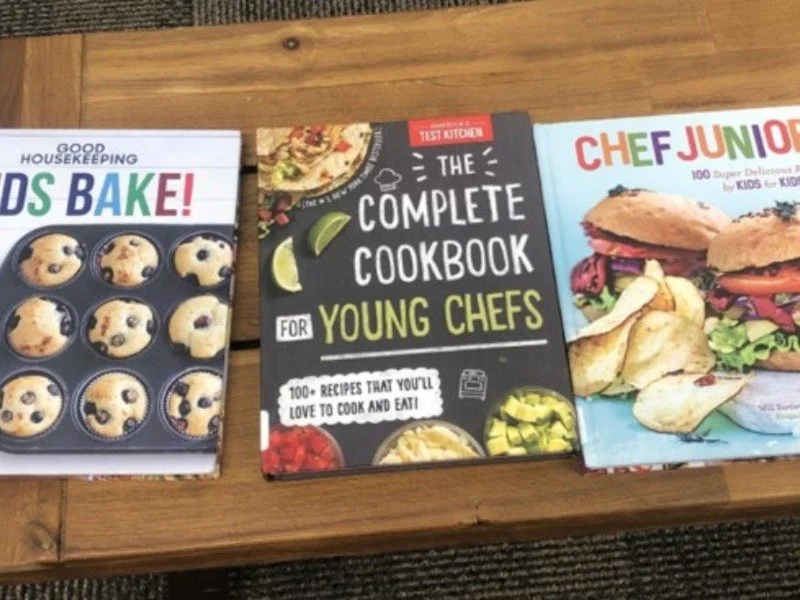
For this blog post I am sharing a report I wrote for the Bring Me a Book National School Consortium. The organization provides books for underserved communities. I am proud to serve on the expert literacy team. I invited Paradise Ridge School in Paradise CA to be part of the program and we selected two classrooms of students to receive 6 books each over the year to promote independent reading at school and in the home. Read the fabulous stories about how the third grades created their own impromptu book clubs and how the boys started a cookbook craze! See the powerful suggestions to use at your school to promote more reading.
For this blog post, I am sharing a report I wrote for the Bring Me a Book National School Consortium. The organization provides books for underserved communities. I am proud to serve on the expert literacy team. I invited Paradise Ridge School in Paradise CA to be part of the program and we selected two classrooms of students to receive 6 books each over the year to promote independent reading at school and in the home. Read the fabulous stories about how the third grades created their own impromptu book clubs and how the boys started a cookbook craze! See the powerful suggestions to use at your school to promote more reading.
Read the full report: https://www.bringmeabook.org/trusting-young-learners/
